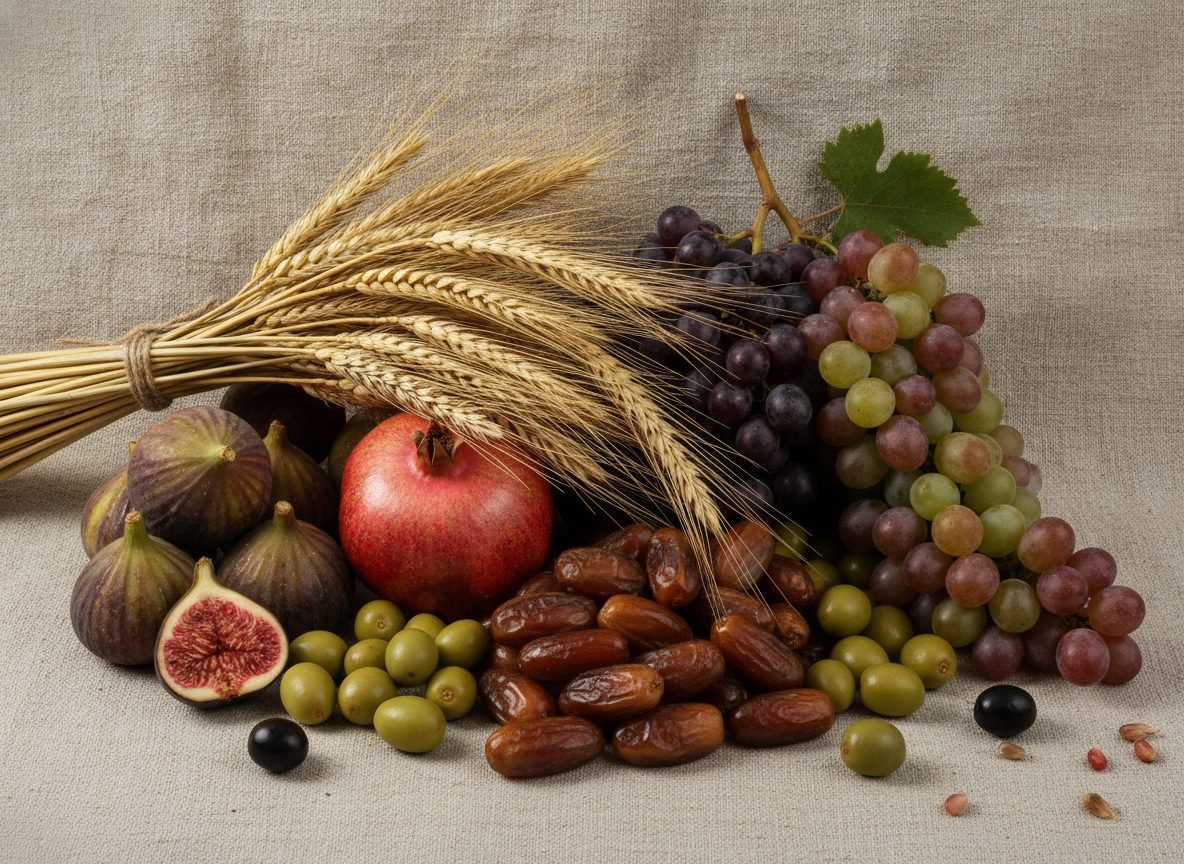
A land of wheat and barley
The Torah names the seven species for which the Land of Israel is praised (Deuteronomy 8:8): “A land of wheat and barley, of vines and fig trees and pomegranates, a land of olive oil and (date) honey.”
On Tu BiShvat it is customary to eat the fruits of these species and other tree fruits, thanking the land for its bounty. People especially try to taste fruit grown in the Land of Israel itself.
Wheat
Bread is the foundation of the table. The list begins with wheat, as with the land’s chief gift.
Barley
The most ancient grain, food of simplicity. Its harvest opened the counting of the Omer.
Grapes
The vine and wine — joy and blessing of the festive table.
Figs
The sweet fig — an image of peace and plenty, each “under their own fig tree.”
Pomegranate
A fruit full of seeds; by tradition, an image of many good deeds.
Olives
The olive and its oil — the light of the menorah and a symbol of endurance.
Dates (honey)
The “honey” of Scripture is date honey. The sweetness that closes the list.
Rind, pit, and core
The kabbalists divided the seder fruits into three kinds — by what in them is edible and what is not. In this division they saw an image of the spiritual levels of a person and of the world.
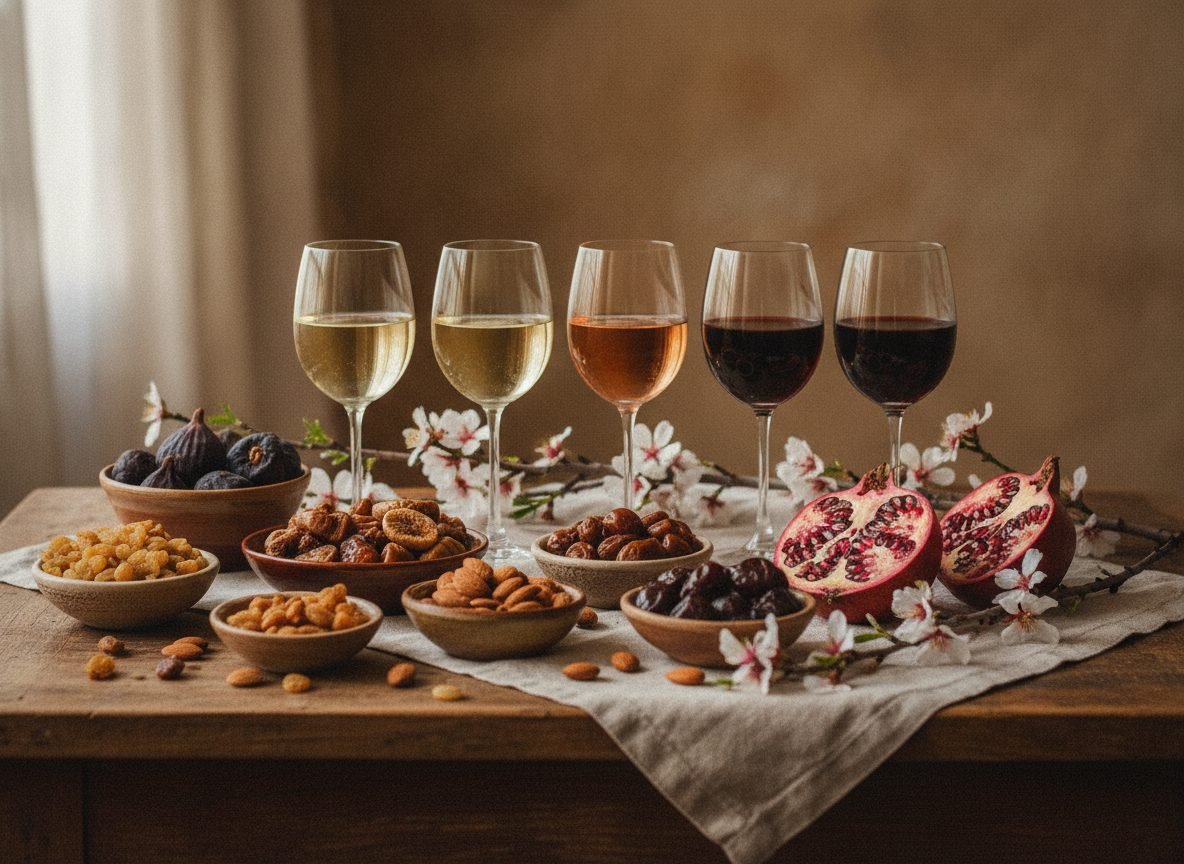
Three levels of fruit
Inedible rind
Pomegranate, nut, banana: a hard or bitter shell hides a sweet core — like protection around the vulnerable.
A pit within
Date, olive, plum: soft outside but with a hard kernel — goodness that still conceals a firm core.
Edible whole
Fig, grape, berry: edible entirely — an image of wholeness and the highest purity.
From white to red
The four cups of wine in the seder change color like the seasons — from winter’s pallor to summer’s fullness.
White
Winter. The earth sleeps, the blossom has not yet come.
Pale pink
The first warmth. The almond awakens.
Deep pink
Spring in full force, the orchards in bloom.
Red
The fullness of summer and the ripeness of the fruit.
A new fruit and a blessing
On Tu BiShvat people try to taste a new fruit of the season not yet eaten that year, and to say over it the blessing “Shehecheyanu” — gratitude for having lived to reach this moment.
Over tree fruits one says “borei pri ha-etz,” over grains and other foods their own blessings. The meal itself becomes a quiet lesson in attentiveness to the gifts of the land.